
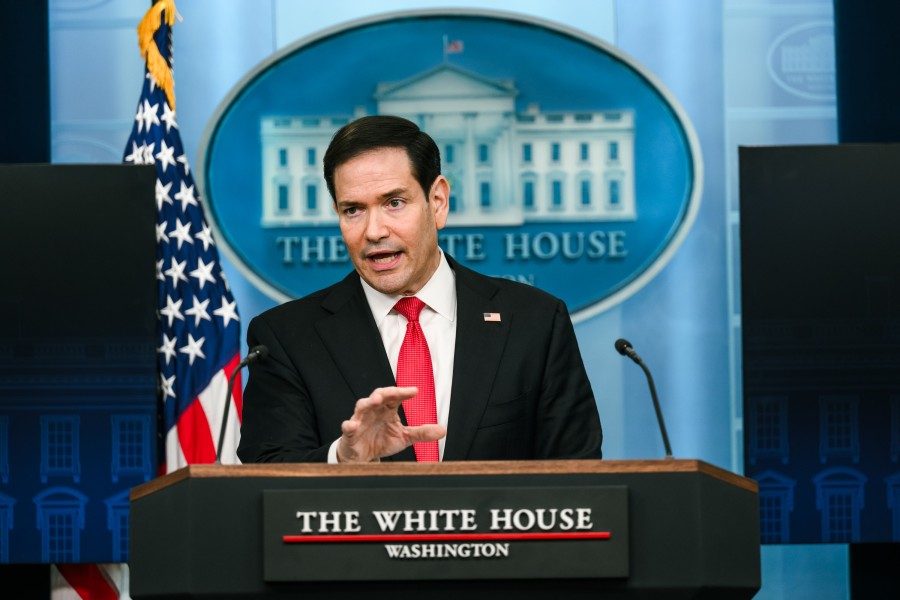
US Secretary of State Marco Rubio is currently engaging in talks with Gulf allies concerning a proposed $300 billion fund intended for Iran’s reconstruction. However, there is apprehension among regional partners regarding the possibility that this financial aid might inadvertently bolster Tehran’s military capabilities. Rubio’s efforts to address these issues began with his arrival in Abu Dhabi, where discussions are centered around a recent agreement aimed at resolving the prolonged conflict between the US, Israel, and Iran.
The reconstruction fund proposal has sparked considerable debate among US allies, who are worried that Iran might channel the funds towards enhancing its defense systems. A significant concern for Gulf countries is that the agreement does not adequately tackle Iran’s ballistic missile program. Both the United Arab Emirates and Kuwait, which host key US military installations, have voiced security concerns after being targeted during the conflict, urging stronger assurances against potential future threats.
Rubio’s diplomatic mission seeks to balance maintaining support for the agreement while addressing the criticisms and reservations of regional partners as well as some lawmakers in Washington. His discussions in the Gulf are expected to also cover unresolved issues and apprehensions about the deal. The Secretary of State aims to reassure Gulf leaders who, despite backing efforts to end the conflict, remain wary about the specifics of the agreement.
Gulf nations are particularly focused on ensuring that any agreement with Iran does not compromise their security or allow Iran to enhance its military arsenal. The discussions in Abu Dhabi are part of Washington’s broader strategy to sustain regional support for the deal while addressing the legitimate concerns of its allies. As Rubio continues his diplomatic efforts, the outcome of these talks could significantly influence the future dynamics in the region and the implementation of the Iran reconstruction fund.